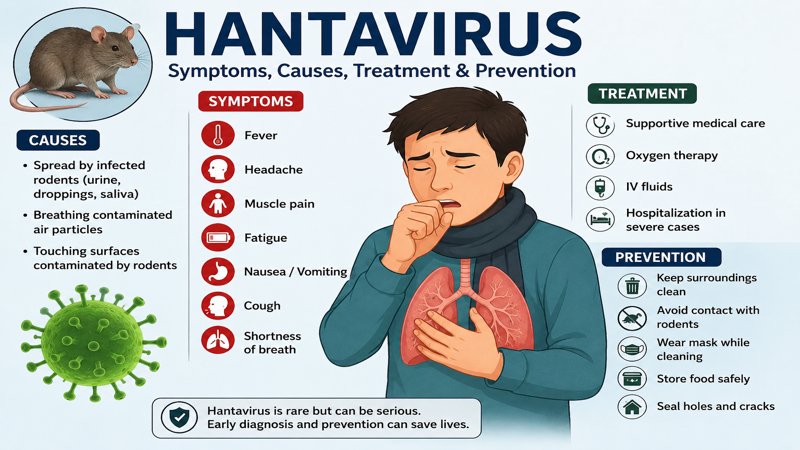

Hantavirus is a rare but serious viral infection that can quickly become life-threatening if not treated early. Many people ignore early flu-like symptoms, which may delay diagnosis. In this complete guide, you will learn the warning signs, causes, treatment options, and prevention tips to protect yourself and your family.
Hantavirus is a rare viral disease spread mainly through contact with infected rodents, especially their urine, droppings, or saliva. Early symptoms include fever, fatigue, muscle pain, and cough. Severe cases can cause breathing problems and lung failure. Early medical treatment and rodent control are essential for prevention and survival.
What is Hantavirus?
Hantavirus is a group of viruses mainly carried by rodents such as rats and mice. Humans can become infected when they breathe in contaminated air particles from rodent urine, droppings, or saliva.
The infection can lead to serious illnesses, including:
- Hantavirus Pulmonary Syndrome (HPS)
- Hemorrhagic Fever with Renal Syndrome (HFRS)
HPS mainly affects the lungs and can become deadly within days if not treated quickly.
Overview Summary
- Hantavirus spreads through infected rodents.
- Early symptoms look similar to the flu.
- Severe infection can damage the lungs and kidneys.
- There is no specific cure, but early hospital care improves survival.
Causes of Hantavirus
Hantavirus infections are usually caused by exposure to infected rodents.
Common causes include:
- Breathing contaminated dust
- Touching rodent droppings or urine
- Cleaning closed spaces with rat infestations
- Eating contaminated food
- Rarely through rodent bites
Common Places of Exposure
- Farms
- Warehouses
- Old buildings
- Campsites
- Rural homes
- Storage rooms
Hantavirus Symptoms
Symptoms usually appear 1–8 weeks after exposure.
Early Symptoms
- Fever
- Fatigue
- Chills
- Muscle aches
- Headache
- Dizziness
- Nausea
- Vomiting
- Abdominal pain
Severe Symptoms
- Shortness of breath
- Chest tightness
- Persistent cough
- Rapid heartbeat
- Low blood pressure
- Fluid buildup in lungs
Severe symptoms require emergency medical care immediately.
Risk Factors
You may have a higher risk of hantavirus if you:
- Live in rodent-infested areas
- Work in farming or agriculture
- Clean dusty storage areas
- Camp or hike frequently
- Store food improperly
- Live in rural environments
Men are slightly more affected because of occupational exposure.
Why Early Detection Matters
Early diagnosis can save lives. Hantavirus may initially look like the flu, but it can rapidly progress to respiratory failure.
Importance of Early Detection
- Prevents complications
- Improves survival rates
- Reduces lung damage
- Helps doctors provide supportive care faster
Overview Summary
Hantavirus symptoms often begin like common viral infections. However, breathing difficulty after fever or rodent exposure is a major warning sign that needs urgent medical evaluation.
Diagnosis of Hantavirus
Doctors diagnose hantavirus using:
- Physical examination
- Medical history
- Blood tests
- Chest X-rays
- Oxygen level monitoring
- PCR testing
Doctors may ask about rodent exposure or recent travel history.
Hantavirus Treatment
There is currently no specific antiviral cure for hantavirus, but supportive treatment can improve recovery.
Hospital Treatment
- Oxygen therapy
- IV fluids
- Intensive care support
- Ventilator support in severe cases
Medicines
Doctors may prescribe:
- Fever reducers
- Pain relievers
- Breathing support medications
Do not self-medicate without medical advice.
Home Remedies & Supportive Care
These remedies may support recovery but cannot replace medical treatment.
- Drink plenty of fluids
- Get proper rest
- Eat nutritious foods
- Avoid smoking
- Monitor breathing symptoms
Lifestyle Tips
- Keep homes rodent-free
- Maintain proper hygiene
- Avoid dusty environments
- Wear masks while cleaning closed spaces
- Seal food containers properly
Best Diet & Foods During Recovery
A healthy diet helps strengthen immunity during recovery.
Recommended Foods
- Citrus fruits
- Leafy vegetables
- Soup and broth
- Eggs
- Yogurt
- Fish
- Nuts and seeds
- Whole grains
Foods to Avoid
- Junk food
- Excess sugar
- Smoking
- Alcohol
- Processed foods
Must read: 8 Best Child Immunity Boosting Foods for Healthy Growth
Prevention Tips
Prevention is the best protection against hantavirus.
Effective Prevention Measures
- Control rats and mice at home
- Clean rodent areas carefully
- Use gloves and masks while cleaning
- Avoid sweeping dry rodent droppings
- Ventilate closed rooms before entering
- Store food safely
- Dispose garbage properly
Safe Cleaning Method
Instead of sweeping:
- Spray disinfectant first
- Wait 5 minutes
- Use gloves
- Wipe carefully
Overview Summary
The best way to prevent hantavirus is to avoid contact with rodents and their droppings. Proper cleaning methods and household hygiene significantly reduce infection risk.
Local Risk Factors in Pakistan
- Poor sanitation
- Open food storage
- Agricultural exposure
- Flood-affected areas
- Rodent infestations
FAQs About Hantavirus
Is hantavirus contagious from person to person?
Most hantavirus strains do not spread between humans. Infection mainly occurs through contact with infected rodents or contaminated dust particles.
How deadly is hantavirus?
Hantavirus can be very dangerous if untreated. Severe cases affecting the lungs may become life-threatening, especially when breathing problems develop.
Can hantavirus be cured completely?
There is no specific cure yet. However, early hospital treatment and supportive care greatly improve survival and recovery.
What are the first signs of hantavirus?
The earliest symptoms usually include fever, fatigue, muscle aches, headache, and chills. These symptoms often resemble the flu initially.
How long does hantavirus last?
Mild recovery may take a few weeks, while severe cases can require longer hospitalization and rehabilitation.
Can I get hantavirus from pet rodents?
Pet rodents may carry infections if exposed to wild rodents. Proper hygiene and veterinary care reduce the risk significantly.
When should I see a doctor?
Seek medical help immediately if you develop fever and breathing difficulty after rodent exposure or cleaning dusty areas.
Expert Tips
Medical Expert Recommendations
- Never vacuum dry rodent droppings
- Use disinfectant before cleaning
- Wear protective gloves and masks
- Improve home ventilation
- Seek urgent care for breathing issues
Conclusion
Hantavirus is a rare but potentially deadly infection that should never be ignored. Early flu-like symptoms can quickly become severe breathing problems. Understanding the causes, symptoms, treatment, and prevention methods can help save lives.
The best protection is maintaining good hygiene, avoiding rodent exposure, and seeking medical help early if symptoms appear. Awareness and prevention remain the strongest defense against hantavirus infections.