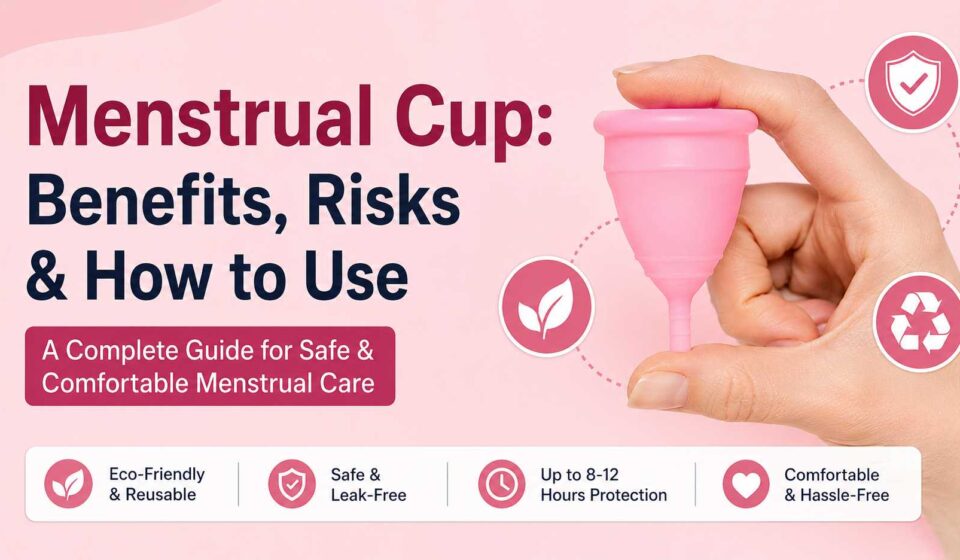

Managing periods can be challenging, especially when dealing with discomfort, leaks, and the ongoing cost of disposable products. A menstrual cup offers a reusable, eco-friendly alternative that can provide longer protection and save money over time.
A menstrual cup is a reusable, flexible cup made from medical-grade silicone, rubber, or elastomer. It is inserted into the vagina during menstruation to collect menstrual blood instead of absorbing it like pads or tampons. When used correctly, it is safe, cost-effective, environmentally friendly, and can provide protection for up to 12 hours.
What Is a Menstrual Cup?
A menstrual cup is a small, bell-shaped device inserted into the vagina to collect menstrual blood. Unlike pads and tampons, it does not absorb fluid.
Most menstrual cups are made from:
- Medical-grade silicone
- Natural rubber latex
- Thermoplastic elastomer (TPE)
A single cup can last several years when properly maintained.
Overview Summary
Key Takeaways
- Reusable menstrual product
- Can be worn for up to 12 hours
- Eco-friendly and cost-effective
- Suitable for light to heavy menstrual flow
- Requires proper cleaning and insertion technique
Why Do Women Choose Menstrual Cups?
Women often switch to menstrual cups because they:
- Reduce monthly expenses
- Produce less environmental waste
- Provide longer protection
- Hold more fluid than many tampons
- May reduce period-related odor
Common Menstrual Symptoms
Many women experience:
- Abdominal cramps
- Lower back pain
- Fatigue
- Mood swings
- Bloating
- Breast tenderness
- Headaches
A menstrual cup does not treat these symptoms but can provide comfortable menstrual management.
Must read: Pregnancy Week by Week Guide: 40 Essential Tips
Risk Factors and Considerations
Before using a menstrual cup, consider:
- First-time users may require practice
- Latex allergy (for latex cups)
- Certain pelvic floor disorders
- Recent gynecological surgery
- Difficulty inserting vaginal products
Consult a healthcare provider if unsure.
Benefits of Using a Menstrual Cup
1. Eco-Friendly
A reusable cup can significantly reduce menstrual waste.
2. Cost Savings
Although the initial cost is higher, a menstrual cup can last for years.
3. Longer Wear Time
Many cups can be worn safely for up to 8–12 hours.
4. Higher Capacity
Suitable for women with heavier menstrual flow.
5. Reduced Odor
Since blood is collected rather than exposed to air, odor is often reduced.
6. Travel Friendly
Less need for frequent product changes.
Overview Summary
Why Menstrual Cups Are Popular
Menstrual cups provide long-lasting protection, reduce waste, save money, and support sustainable menstrual care. They are becoming increasingly popular worldwide due to their convenience and environmental benefits.
How to Use a Menstrual Cup
Step 1: Wash Your Hands
Always clean your hands thoroughly before handling the cup.
Step 2: Fold the Cup
Common folds include:
- C-Fold
- Punch-Down Fold
- 7-Fold
Step 3: Insert the Cup
Insert the folded cup into the vagina and allow it to open fully.
Step 4: Check the Seal
Rotate the cup gently to ensure proper placement.
Step 5: Removal
- Wash hands
- Pinch the base
- Release the seal
- Remove slowly
Step 6: Empty and Reinsert
Empty contents, rinse, and reinsert.
Possible Risks and Side Effects
Although generally safe, some users may experience:
- Initial discomfort
- Difficulty inserting or removing
- Minor leakage
- Vaginal irritation
- Rare infections due to poor hygiene
Severe complications are uncommon when instructions are followed properly.
Must Read: How to Improve Sleep Quality
Diagnosis (If Problems Occur)
Seek medical evaluation if you experience:
- Severe pelvic pain
- Persistent discomfort
- Fever
- Unusual vaginal discharge
- Signs of infection
A healthcare provider may perform a pelvic examination to identify the cause.
Treatment Options
Medicines
No medicines are typically required for menstrual cup use.
If infection occurs, a doctor may prescribe:
- Antibiotics
- Antifungal medications
Home Remedies
- Warm baths
- Proper hydration
- Adequate rest
- Heat pads for cramps
Lifestyle Tips
- Follow hygiene instructions
- Sterilize the cup between cycles
- Replace damaged cups
- Stay hydrated
Cleaning and Maintenance
For safe use:
- Wash with mild soap and water
- Sterilize by boiling between cycles
- Store in a breathable pouch
- Avoid harsh chemicals
Proper cleaning extends the life of the cup and reduces infection risk.
Best Diet During Menstruation
Support menstrual health with:
Iron-Rich Foods
- Spinach
- Lentils
- Red meat
- Beans
Magnesium Sources
- Nuts
- Seeds
- Dark chocolate
Hydrating Foods
- Watermelon
- Cucumbers
- Oranges
Anti-Inflammatory Foods
- Fatty fish
- Fruits
- Vegetables
Prevention and Safety Tips
- Wash hands before insertion
- Empty every 8–12 hours
- Sterilize regularly
- Follow manufacturer instructions
- Replace worn-out cups
- Seek medical advice for persistent discomfort
Also Read: Apple Benefits: Your Daily Nutrition Guide for 2026
Overview Summary
Safe Menstrual Cup Use
Using a menstrual cup safely requires proper insertion, regular cleaning, and routine sterilization. Most women can use menstrual cups comfortably with practice and good hygiene habits.
FAQs
Is a menstrual cup safe?
Yes. Menstrual cups are considered safe when used according to manufacturer instructions and maintained with proper hygiene practices.
Can a menstrual cup get lost inside the body?
No. The cervix prevents a menstrual cup from traveling beyond the vaginal canal.
How long can I wear a menstrual cup?
Most menstrual cups can be worn safely for 8–12 hours depending on flow volume.
Can teenagers use menstrual cups?
Yes. Menstrual cups are available in different sizes and can be suitable for teenagers with proper guidance.
Does a menstrual cup hurt?
When inserted correctly, a menstrual cup should not cause pain. Some users may experience a learning period.
Can I sleep with a menstrual cup?
Yes. Many women comfortably wear a menstrual cup overnight.
Is a menstrual cup better than pads?
Both options have advantages. Menstrual cups offer longer wear time and less waste, while pads may be easier for beginners.
Expert Tips
Healthcare professionals recommend:
- Choose the correct size based on age and flow.
- Practice insertion when relaxed.
- Trim the stem only if necessary.
- Always sterilize between menstrual cycles.
- Replace the cup according to manufacturer recommendations.
Conclusion
A menstrual cup is a safe, eco-friendly, and cost-effective menstrual care option for many women. With proper use and hygiene, it can provide reliable protection, reduce environmental waste, and improve comfort during periods. If you’re looking for a sustainable alternative to pads and tampons, a menstrual cup may be worth considering. Always consult a healthcare professional if you have concerns about menstrual health or cup usage.